Phylogeographic relationships of Baltic and Nordic populations of the Copse Snail Arianta arbustorum, with taxonomical implications
Keywords:
phylogenetics, Pleistocene, poleward range expansion, population genetics, StylommatophoraAbstract
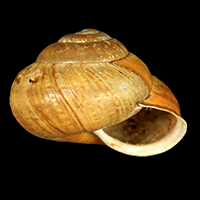
The Copse Snail, Arianta arbustorum (Linnaeus, 1758), is a common species in Europe, reaching from the Pyrenees in the south to the Arctic circle in northern Norway, and from the British Isles in the west to Russia in the east, with populations further afield in Iceland, Faroe Islands, and Canada. While its populations in Central Europe and the Alps have been widely studied, little is known about the Baltic coast and Nordic populations in Europe, including the Icelandic A. a. pseudorudis (Schlesch, 1924). We conducted a phylogeographic study focusing on the Baltic and Nordic populations of A. arbustorum, covering nearly all the species’ distribution, including individuals from all recognized subspecies. Our analysis showed the existence of a monophyletic Baltic/Nordic clade that represents a recent expansion front of the copse snail towards northern latitudes. Moreover, there were likely multiple introduction events in Iceland, and A. a. pseudorudis is considered a synonym of A. a. arbustorum. The type locality of A. arbustorum is restricted to Sweden, based on original literature and reassessment of syntypes. Arianta canigonensis (Boubée, 1833) is considered a separate species and has nomenclatural priority over A. xatartii (Farines, 1834), resulting in new combinations: A. canigonensis doriae (Paulucci, 1878) comb. nov., A. canigonensis gaillardi (Germain, 1912) comb. nov., A. canigonensis repellini (Reeve, 1852) comb. nov., A. canigonensis vareliensis (Ripken & Falkner, 2000) comb. nov., and A. canigonensis xatartii (Farines, 1834) comb. nov. Only three subspecies remain in A. arbustorum: the nominate A. a. arbustorum, A. a. stenzii (Rossmässler, 1835), and A. a. styriaca (Frauenfeld, 1868); the other subspecific taxa (alpicola, picea, pseudorudis) cannot be maintained as distinct subspecies and are synonymised with nominate arbustorum.
Downloads
Additional Files
Published
Issue
Section
License
Copyright (c) 2026 The authors

This work is licensed under a Creative Commons Attribution 4.0 International License.