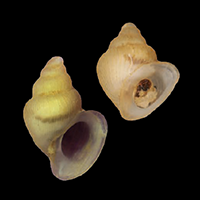
Plagigeyeria montenegrina Bole, 1961 (Caenogastropoda: Truncatelloidea: Moitessieriidae): morphology and molecules in the species and genus taxonomy
DOI:
https://doi.org/10.61733/jconch/44105Keywords:
Interstitial fauna, Mollusca, phylogeography, stygobiotic faunaAbstract
The shell habitus, teleoconch and protoconch SEM studied surface, radula, female reproductive organs and penis are described and illustrated for Plagigeyeria montenegrina Bole, 1961 from its type locality: Obodska Pećina Cave near Rijeka Crnojevića (Montenegro). The DNA sequences of the mitochondrial cytochrome oxidase subunit I (COI), nuclear histone H3 and ribosomal 18S and 28S genes have been used to infer phylogenetic position of P. montenegrina, which should belong to the genus Paladilhiopsis Pavlović, 1913. The anatomical and shell data strongly suggest that the genus Plagigeyeria Tomlin, 1930, as well as Saxurinator Schütt, 1960 are not distinct, but their status remains open, since type species have not been examined. The discovery of the shells of Plagigeyeria spp. at three interstitial habitats contradicts the common believe in isolation of stygobiotic inhabitants of caves and springs, supposed to be the main factor causing rapid speciation at (nearly) each locality. This, and the wide variability in the morphology, not only of the shell, but also of the anatomy, questions the species distinction of many nominal species described in this group.