Evolution and taxonomy of the populations of Eremina (Gastropoda, Pulmonata: Helicidae) in Morocco
DOI:
https://doi.org/10.61733/jconch/43103Keywords:
Eremina, Helicidae, Morocco, Sahara, shell shape, genital anatomy, DNA, phylogeny, taxonomy, species limits, hybridization, distribution, habitatsAbstract
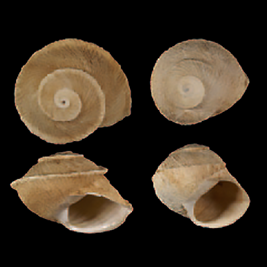
The taxonomy and nomenclature of Moroccan Eremina (Helicidae) is revised, mainly on the basis of extensive new collections made in 1986 and 2016. Molecular data from the recent collections supplemented interpretations based on study of shells and genital anatomy. Four Moroccan species are recognised here: the localised E. dillwyniana s.s. (S. of El Ouatia [ = Tan-Tan Plâge] to Tarfaya) and the widespread E. duroi (near Sidi Ifni southwards to N. Mauritania) have rounded shells with low spires and live in a relatively humid zone prone to sea mists just inland of the Atlantic coast. E. vermiculosa has a subglobular shell and occurs further inland around the range of E. dillwyniana and the northern part of that of E. duroi (from near Guelmim to region SW. of Tan-Tan). E. inexspectata with keeled shells has a small range in rocky sandstone hills from the Oued Draa southwards to near Tan-Tan, separating two groups of populations of E. vermiculosa. Populations comprised mainly of intergrades (presumed hybrids) occur in a narrow zone where the ranges of E. duroi and E. vermiculosa meet. Intergrades of E. inexspectata with E. vermiculosa occur within populations of the former species. Subfossil (Quaternary) shells show that the ranges of both E. duroi and E. vermiculosa formerly extended further inland, into desert regions now too arid and sparsely vegetated to support either taxon; fossils also demonstrate past occurrence of E. vermiculosa at a site that now has living E. inexspectata. Subfossil shells of the apparent hybrid of E. duroi with E. vermiculosa suggest that hybridization occurred when they met in the past, far outside the modern range of either species. Treatment of all four forms at species rank is based on the very narrow modern hybrid zones between E. duroi and E. vermiculosa and evidence that their hybridization elsewhere during the Quaternary did not lead to widespread introgression. Nevertheless, lack of sympatry, evidence of repeated hybridization where forms meet, the rather small differences in habitats, lack of differences in genital morphology and sometimes unresolved DNA sequences may imply that the speciation process in these taxa is incomplete. Possible explanations for the evolution of different shell shapes are discussed: the clearest environmental correlation of shell type being with high humidity near the coast (low-spired shells) and much lower humidity inland (subglobular shells with larger apertures). The narrow zones of hybridization apparently imply that intermediate shell types are at a disadvantage.