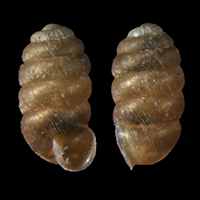
Relic land snails in the Caucasian glacial refugium: a first non-fossil record of Vallonia tenuilabris from western Eurasia
DOI:
https://doi.org/10.61733/jconch/42508Keywords:
Pleistocene, relics, terrestrial molluscs, CaucasusAbstract
In the upper part of the Sophia River Valley near Arkhyz village (Northern Caucasus, Russia) at an altitude of 2000–3000 m an unusual species composition of land snails was observed. The species composition herewith reported is similar to that known from the Pleistocene of the East European Plain and consists of 14 species, including 3 extremely rare and with fragmented distributions: Vallonia tenuilabris, Zoogenetes harpa and Pupilla sterrii. Most of other species are common and widespread and only 2 of the 14 are Caucasian endemics. It suggests that this species composition originates from the Pleistocene malacofauna of the Ciscaucasia and adjacent territories of the East European Plain and the Sophia River Valley is a glacial refugium. The 56 collected specimens of P. sterrii are not quite usual—all their shells have no white callus that is normally present in this species and several specimens are toothless or have 3 teeth (normally 2 teeth are present).